
The Orgasm Gap Is Real. Ari Lennox Just Made the Internet Prove It.
When Ari Lennox told the truth, the internet told on itself.
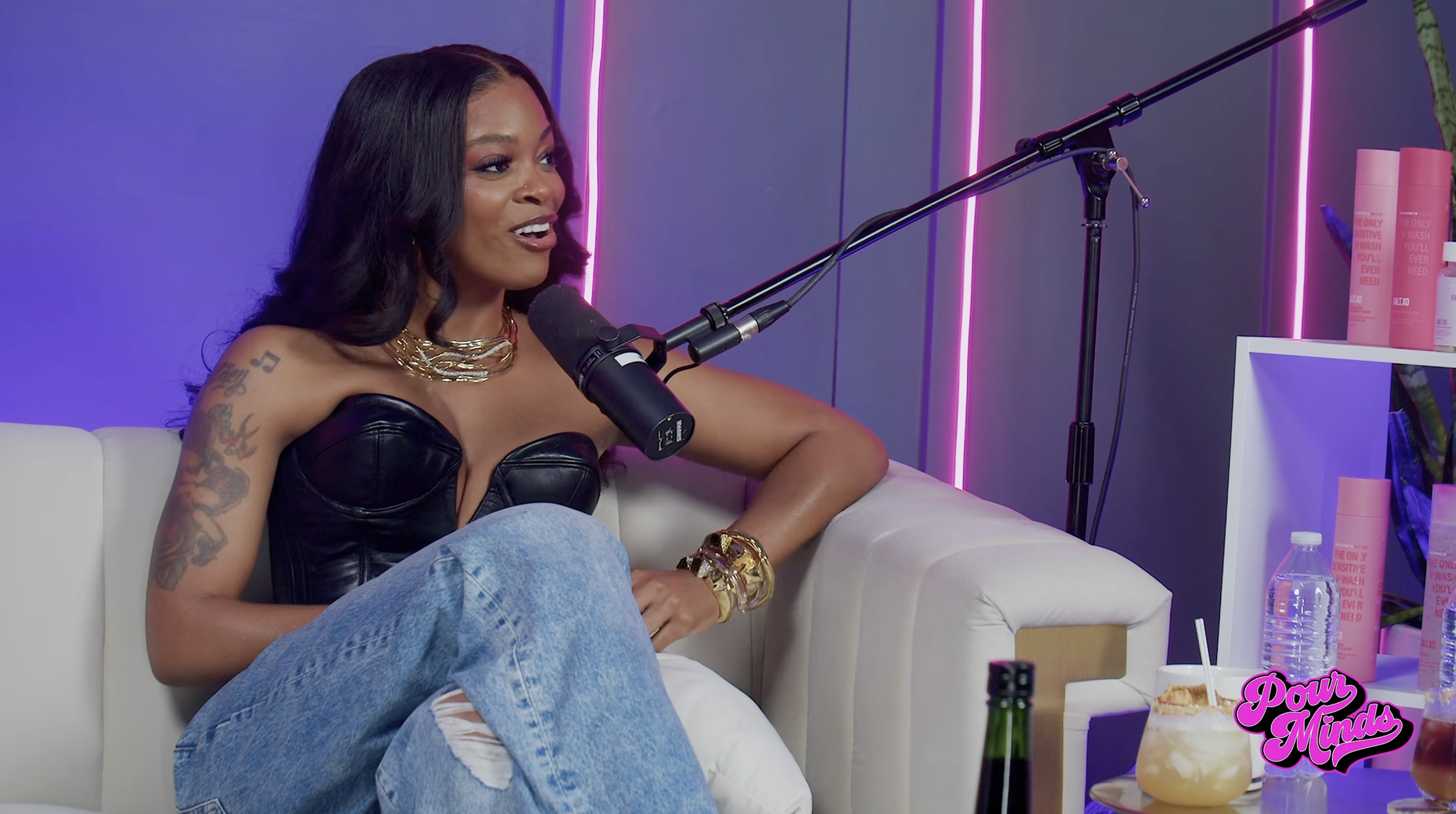
Ari Lennox, Pour Minds Podcast
In a recent episode of the Pour Minds Podcast, the Grammy-nominated R&B singer sat down with hosts Lex P and Drea Nicole for what became one of the most talked-about conversations in recent memory — not because it was shocking, but because it was honest. Fresh off the release of her critically acclaimed third album Vacancy, Lennox revealed that she has never orgasmed from penetrative sex alone, telling the hosts that penetration in isolation has never led her to climax — and that for her, the full experience requires emotional connection, not just physical contact. She was candid about emotional disconnects in past relationships and the way those dynamics affected her intimacy. The clip went viral within hours. And in the comment section, right on cue, arrived the men who took it personally.
You just haven't been with the right one.
Mostly Sugar Women’s Health, Intimacy & Lifestyle contributor Jaleelah Harris clocked it immediately in her breakdown reel. "People are in the comments basically saying, 'Oh yeah, I never had a good man before' — and that mindset is a part of the problem," Harris reported. That response isn't confidence. It's a deflection. And it's exactly the kind of deflection that has kept this conversation from going anywhere meaningful for decades.
Women being honest about their bodies should not be met with shame and dismissal. Good sex is about communication. It’s about curiosity. It’s about caring that the person you’re having sex with is enjoying themselves.
Jaleelah Harris — Media Correspondent, Women’s Health, Intimacy & Lifestyle
The Numbers Don't Lie, But Society Has Been
The orgasm gap is not a feeling. It is one of the most consistently documented findings in sexual health research, and it has been sitting in the data for more than twenty years while mainstream culture largely ignored it.
In a study of more than 50,000 people, 95% of heterosexual men said they usually or always orgasm during sex — while only 65% of heterosexual women said the same. That's a 30-point gap. In any other area of health and wellness, that number would have triggered national headlines, policy conversations, and a dedicated awareness month. In the bedroom, it's been met with a shrug and a pornography trope.
The penetration data is just as stark. A nationally representative study of over 1,000 women published in the Journal of Sex and Marital Therapy found that only 18.4% reported intercourse alone was sufficient for orgasm, while 36.6% said clitoral stimulation was outright necessary to climax during sex. Fewer than 1 in 5 women can reliably get there from penetration alone. The rest require something different — not more effort, not a better partner, just a different understanding of how women's bodies actually function.
What Ari described on Pour Minds is not an anomaly. It is the statistical norm.
The Anatomy Lesson Nobody Got
Here is what sex education failed to teach — and what pop culture has actively worked against: the clitoris is the center of female sexual pleasure, full stop. The external clitoris contains approximately 8,000 nerve endings — more than any other structure in the human body dedicated solely to sexual pleasure — and when it is not engaged, penetration can feel like nothing, because the sensation and pleasure comes from the clitoris, not the vagina.
The clitoris is the only organ in the human body whose entire purpose is sexual pleasure, and less than 10% of women can orgasm from vaginal penetration alone.
That is not a preference. That is physiology. And yet, for generations, the dominant cultural script has framed penetration as the main event — for both parties — despite the fact that the biology has never supported that narrative for most women. Orgasm gap researcher Dr. Laurie Mintz argues the primary driver of this disparity is what she calls our "cultural ignorance of the clitoris," and the habit of defining women's genitals by the one part that reliably produces orgasm for men, not women.
In research asking thousands of women their most reliable route to orgasm, only 4% named penetration. The other 96% named clitoral stimulation — alone or paired with penetration.
The information has been available. The choice to center it has not.
By The Numbers — The Orgasm Gap
95%
of heterosexual men orgasm during sex
65%
of heterosexual women orgasm during sex
18%
of women orgasm from penetration alone
8K
nerve endings in the clitoris — more than any other structure dedicated solely to pleasure
Sources: Journal of Sex and Marital Therapy | The Conversation / Dr. Laurie Mintz | American Urological Association
What the Comment Section Revealed
Ari Lennox did not ask for feedback. She shared her experience. And the response she received, from men insisting the solution was simply a better partner, is precisely the dynamic that sexual health researchers and educators have been documenting for years.
Harris named it plainly in her reel: "The men that be in these comments talking about 'you just haven't had someone like me' — stop. It's tired." The mindset that a woman's lack of orgasm is a referendum on the men she's been with, rather than a structural gap in how sex is taught, performed, and prioritized, is not just unhelpful. It is the problem. It redirects the conversation away from anatomy and toward ego. It places the burden of proof on women rather than placing curiosity on partners. And it reinforces the exact shame and silence that keeps women from communicating what they actually need in the first place.
Without the vocabulary or the cultural permission to name and communicate their preferences, women's needs go unexpressed. And unexpressed preferences go unmet. The gap compounds.
This is not a call-out. It is a call-in. Because the main reason for the orgasm gap is that women are not getting the clitoral stimulation they need — and cultural messages about the supremacy of intercourse feed directly into that.
The Conversation We Should Actually Be Having
Closing the orgasm gap is not complicated in theory. It requires communication before, during, and after sex. It requires expanding the definition of sex beyond penetration as the default and only act that counts. It requires partners — all partners — to treat mutual pleasure as the baseline, not the bonus.
"Good sex is about communication. It's about curiosity. It's about caring that the person you're having sex with is enjoying themselves," Harris said in her reel. "Women being honest about their bodies should not be met with shame and dismissal."
What Ari Lennox started on Pour Minds, what Lex P and Drea Nicole held space for, and what Harris brought to a wider audience, is the kind of honest, data-backed, shame-free conversation that women deserve to have in public — not just in group chats.
Women have been navigating this gap quietly for a long time. They've been performing satisfaction they weren't feeling, managing egos they didn't create, and apologizing for bodies that were working exactly as designed.
That era is over. The data is out. The conversation is happening.
And if the comment section can't handle it — that's information too.
Haven't seen the reel? Take a look.
Ari Lennox said it. Jaleelah Harris broke it down.
Watch the full breakdown.
Mostly Sugar Media Correspondent Jaleelah Harris covered the viral Pour Minds moment — and the data behind it.
