
We Don't Need Permission to Play: Inside the Mostly Sugar Metaverse and the World It Opens
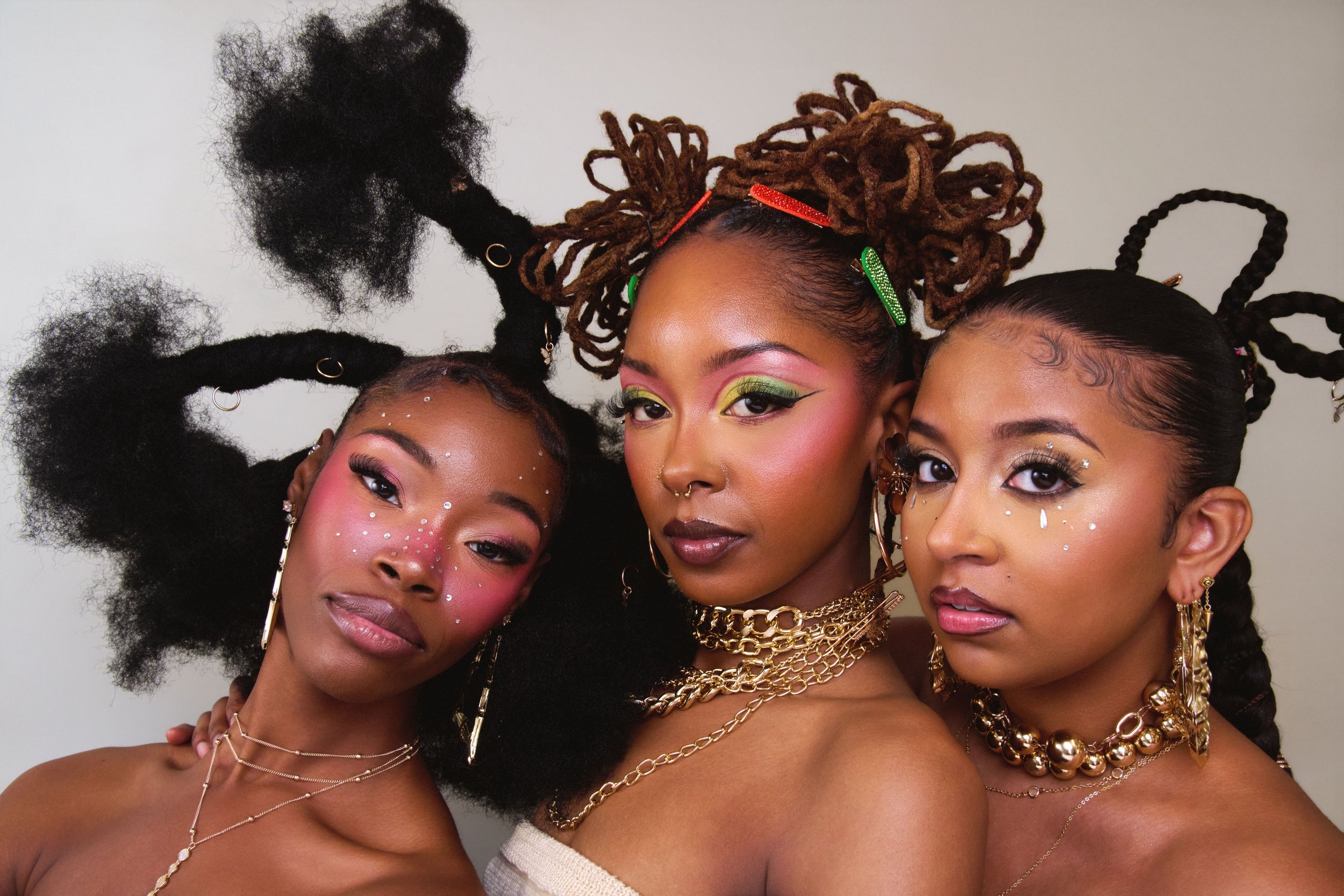
PHOTOGRAPHY: JULIE ADAMS • CREATIVE DIRECTION: LEILANI K. • CREATIVE PRODUCER: ALIYAH COLEY • STYLING: ALIYAH COLEY & AALIYAH ANTANDRE-IMPALA
Mostly Sugar has always known who it is built for. The question was never identity. It was visibility.
What a brand puts into the world is a statement, and not the kind written in a mission document. The real statement is made through creative decisions: who is centered, what kind of woman is shown taking up space, and whether she is given all of it or just enough to be comfortable. We Don't Need Permission to Play is that statement. It is the opening chapter of the Mostly Sugar Metaverse — a creative universe built around women who are done waiting, done shrinking, and done treating beauty as anything other than a form of total self-authorship.
What was built
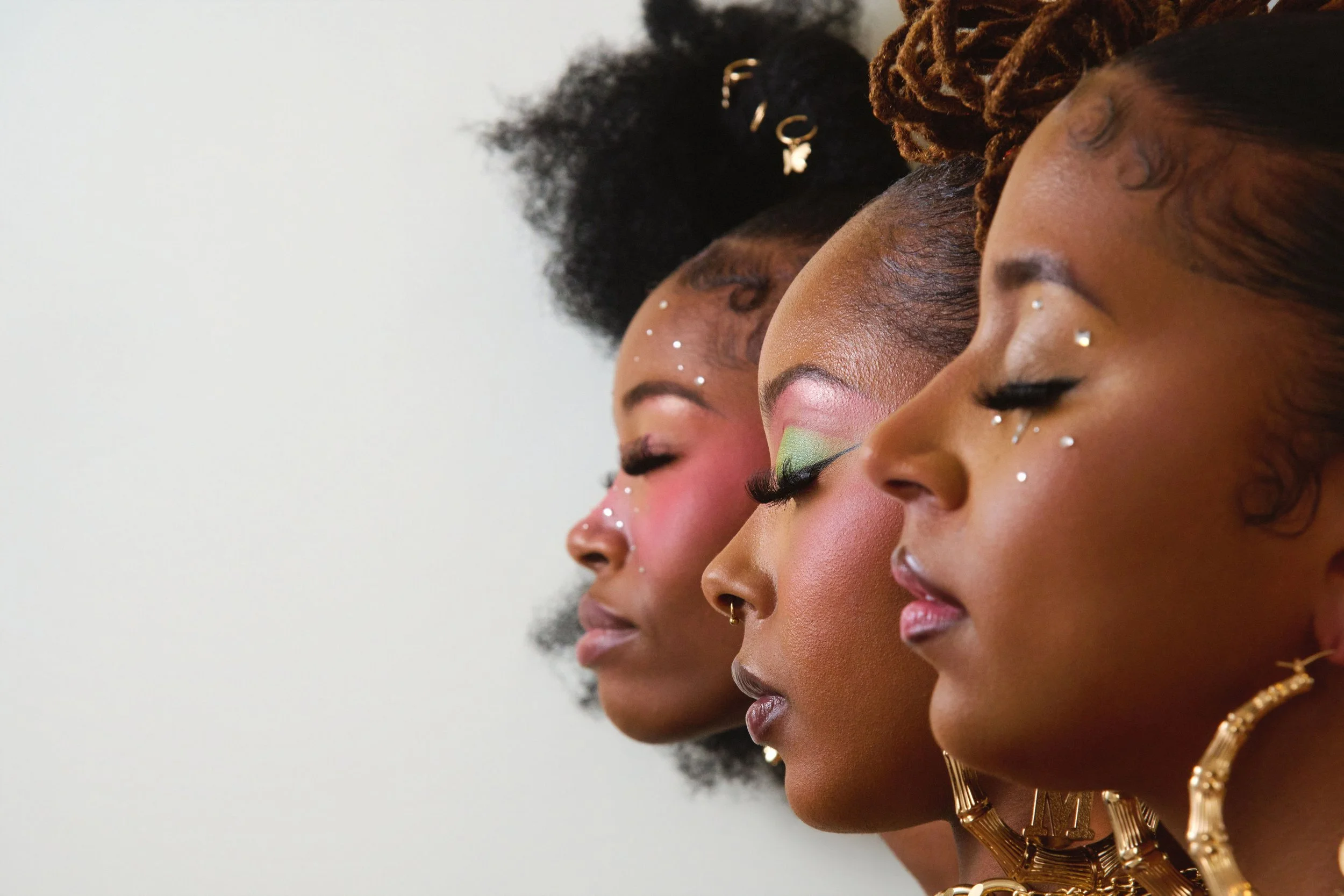
The shoot was conceptualized and directed by Leilani Kabigting, with creative production and styling by Aliyah Coley of 24 Creative Productions, additional styling by Aaliyah Antandre-Impala, and photography by Julie Adams. Together they built an environment where three women, covered in rhinestones and gold jewelry and candy, created a visual world that belongs entirely to them.
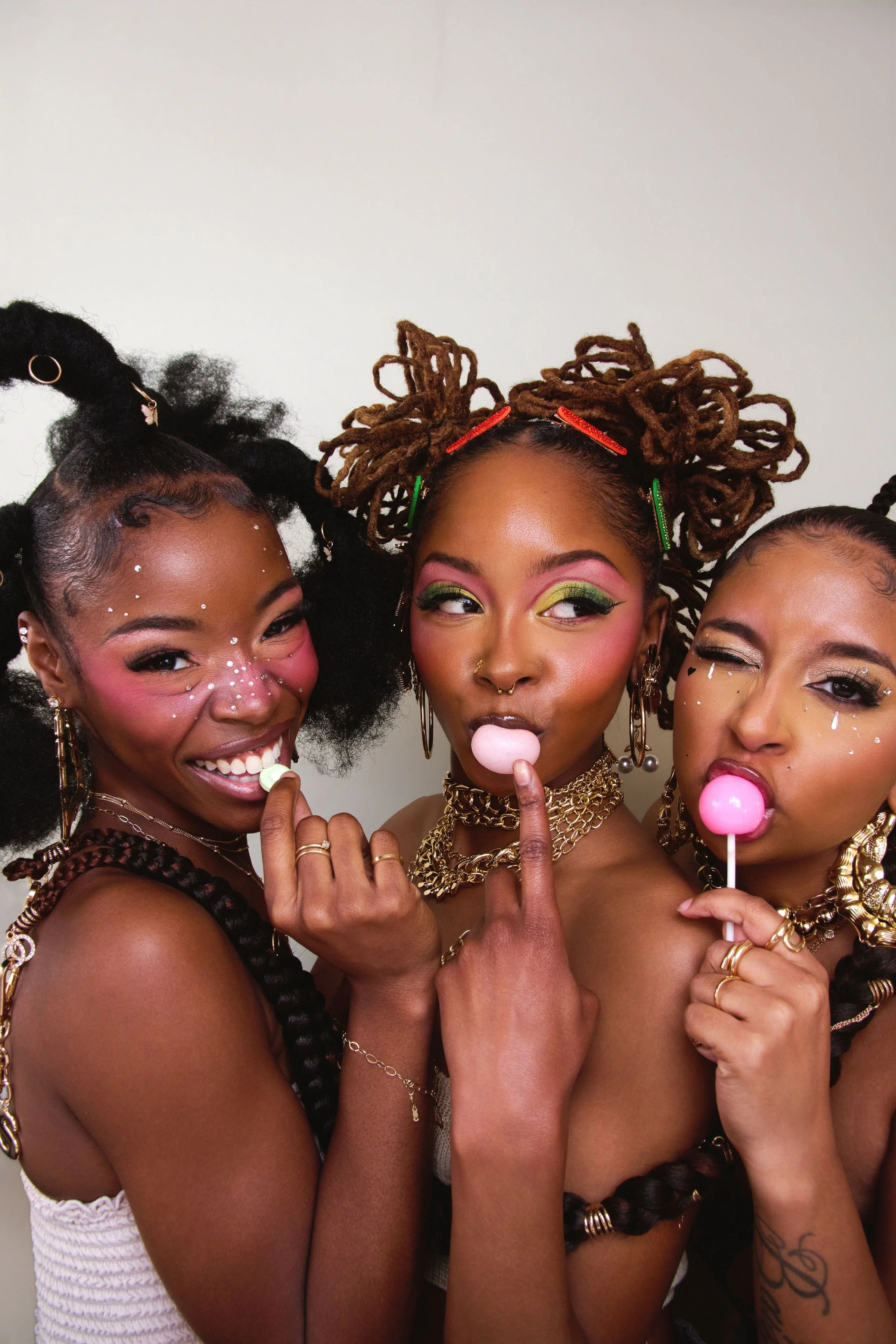
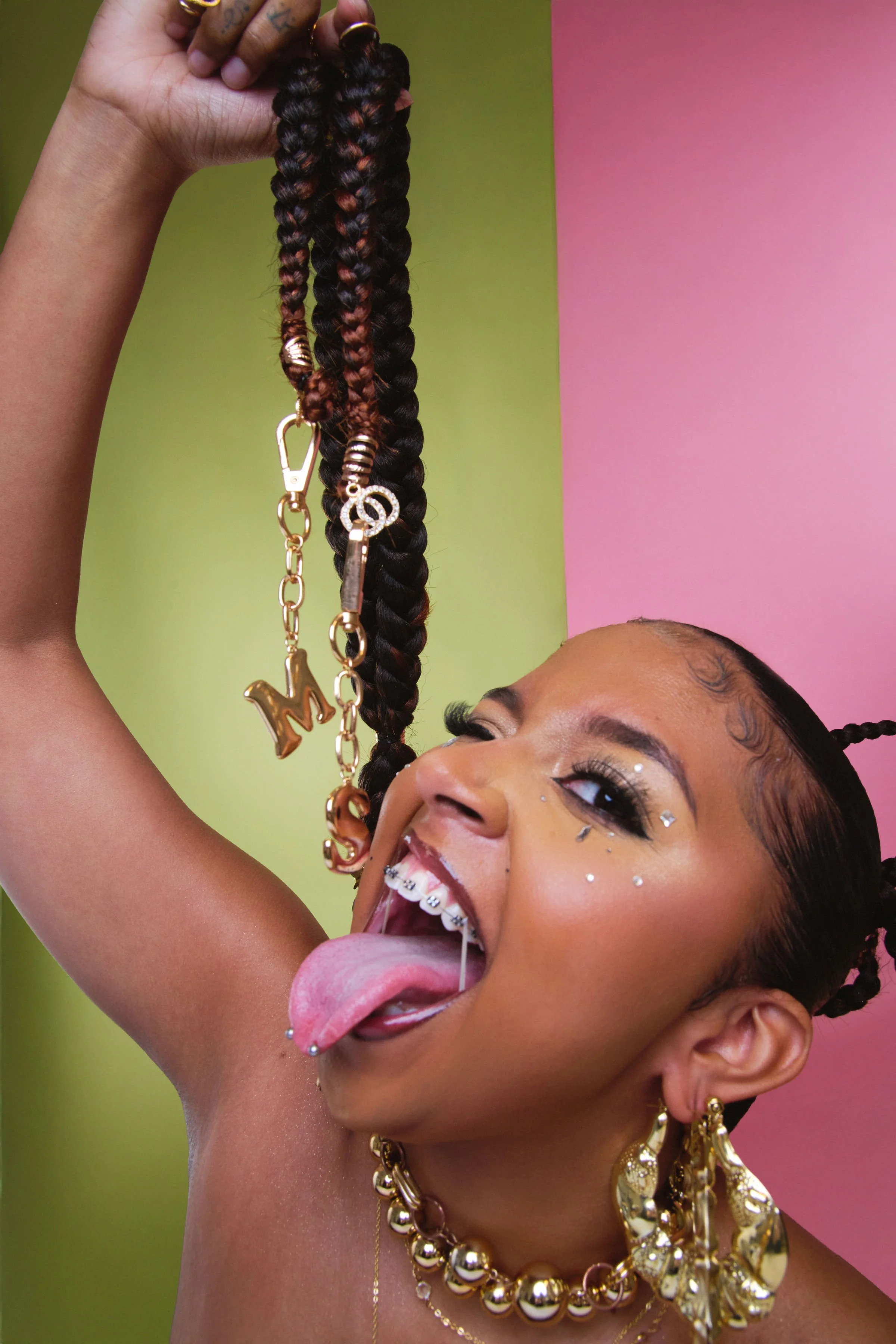
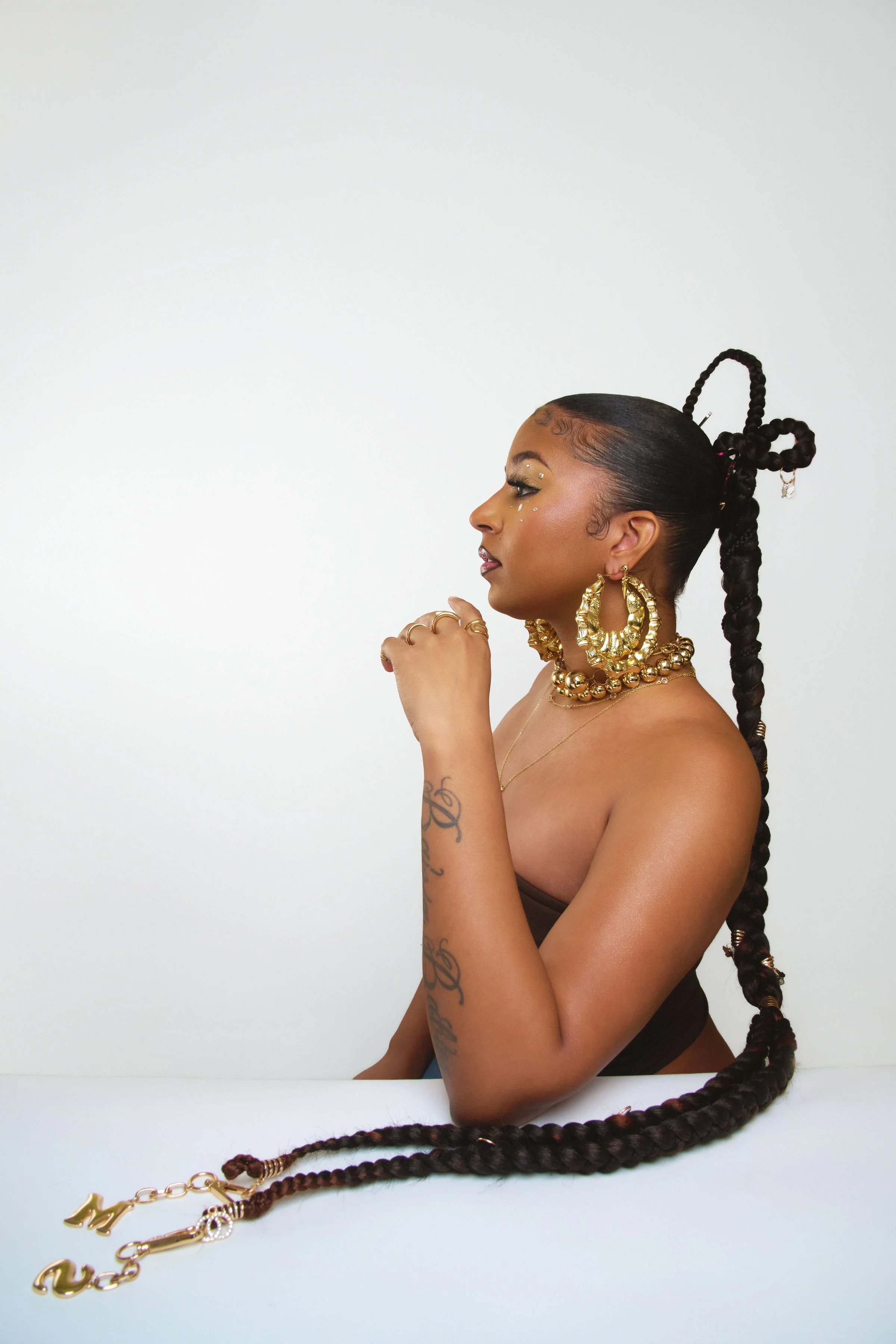
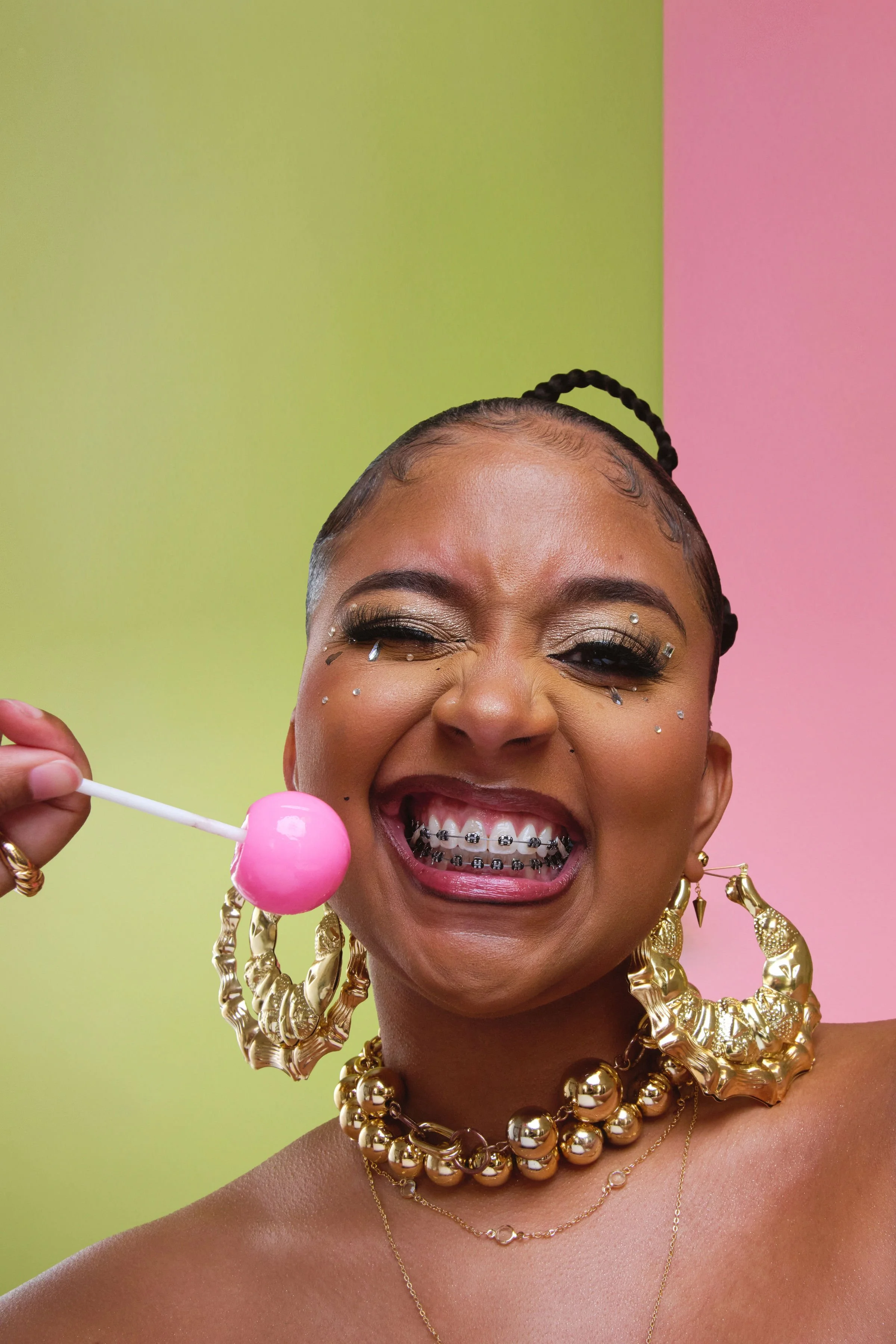
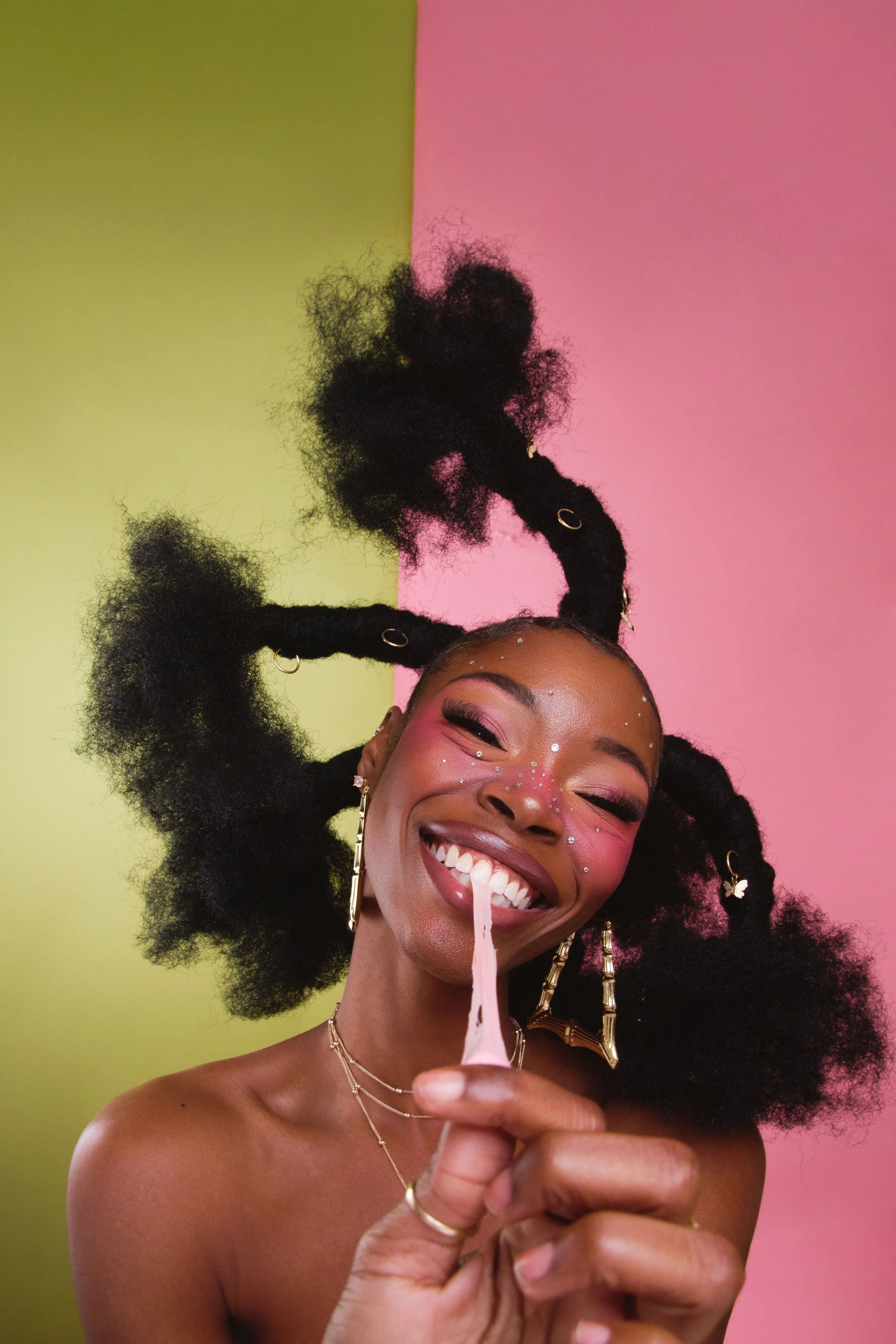
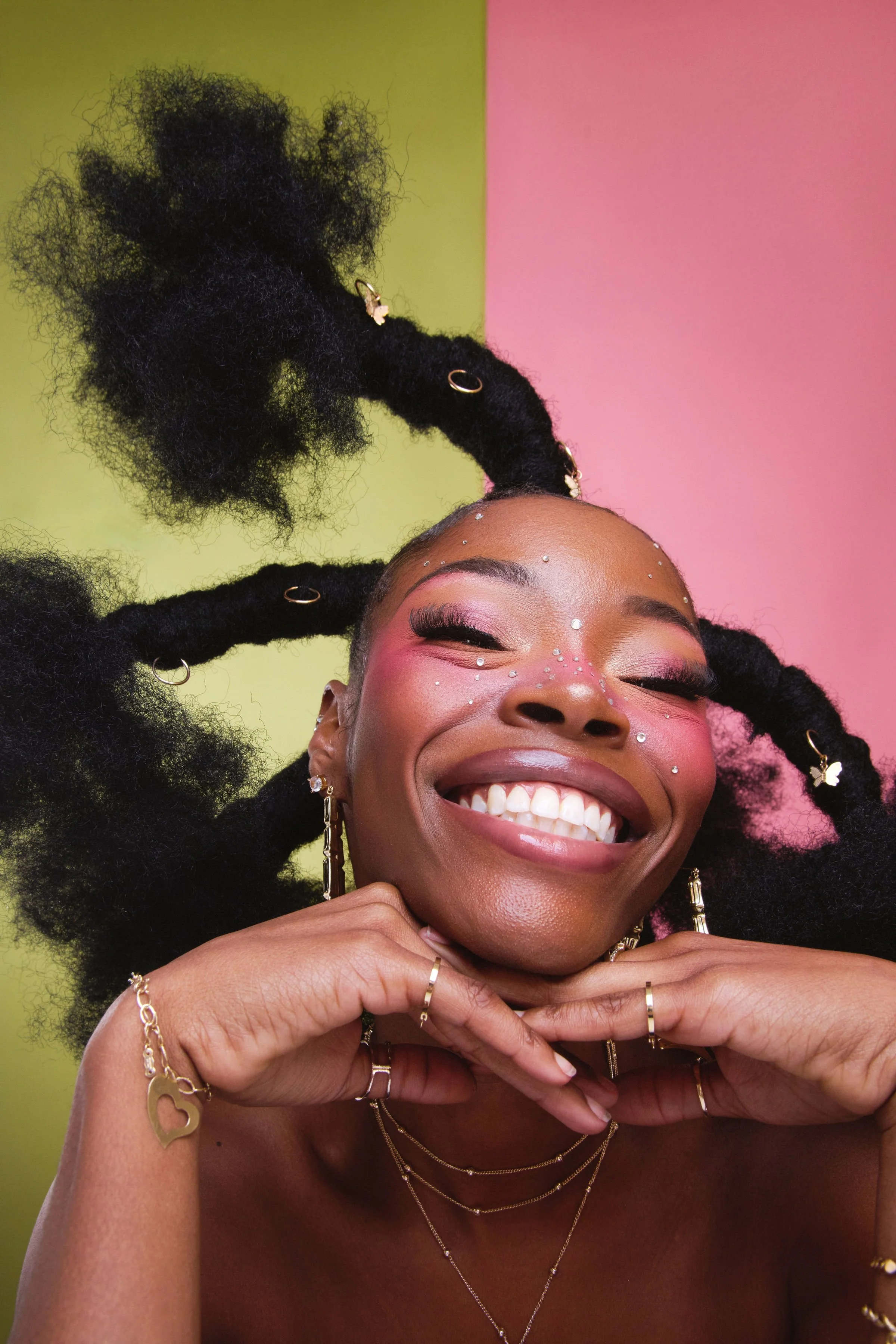
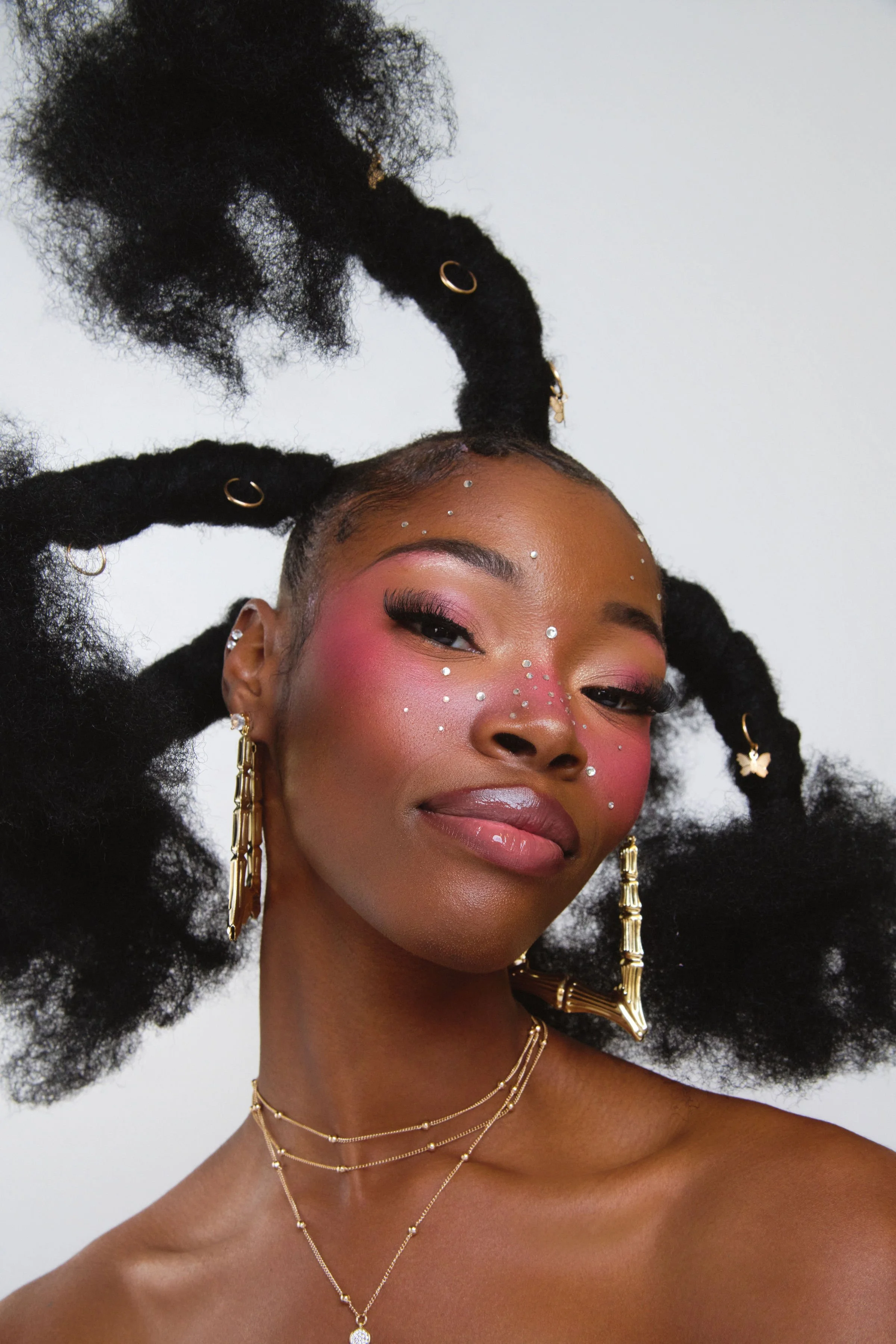
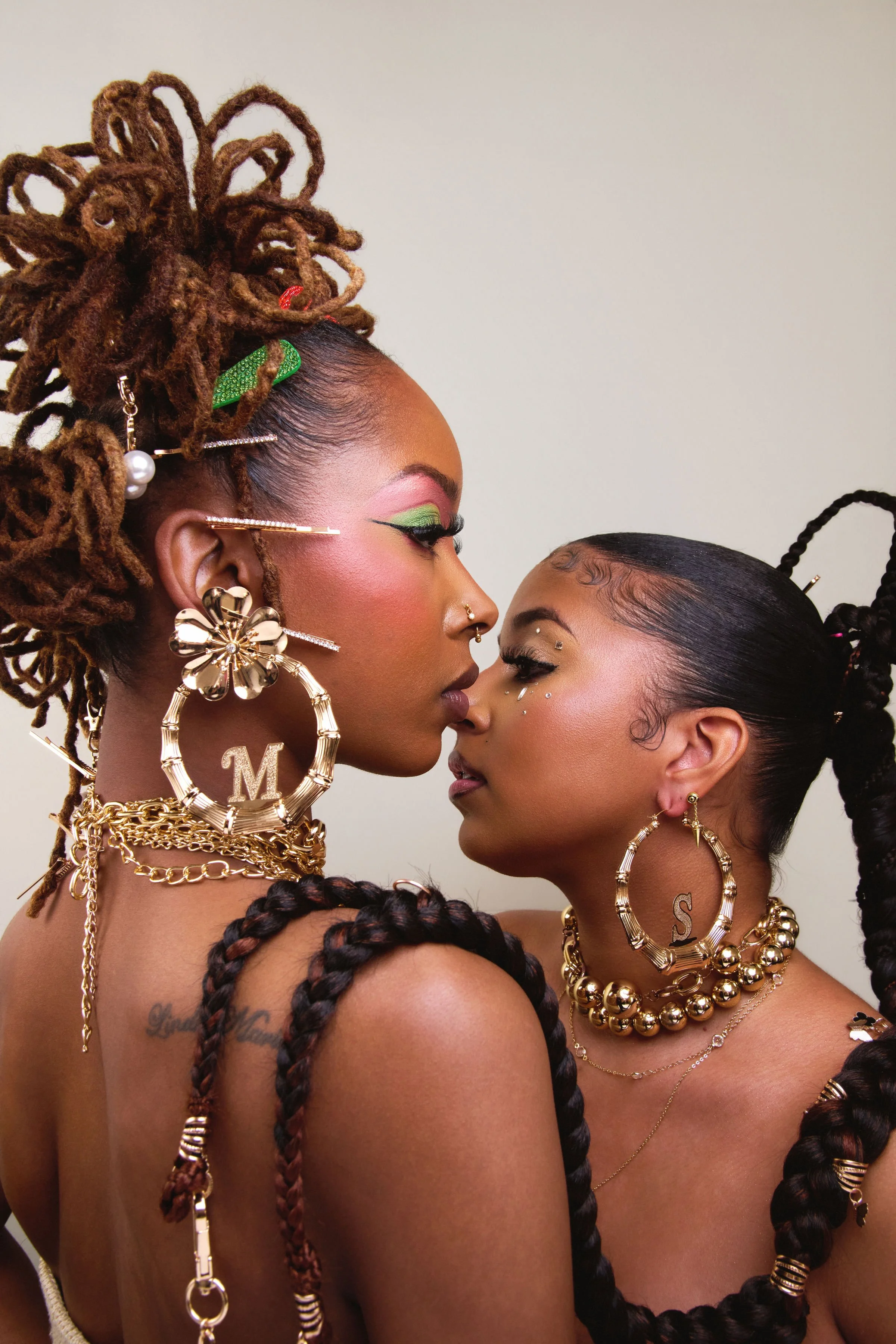
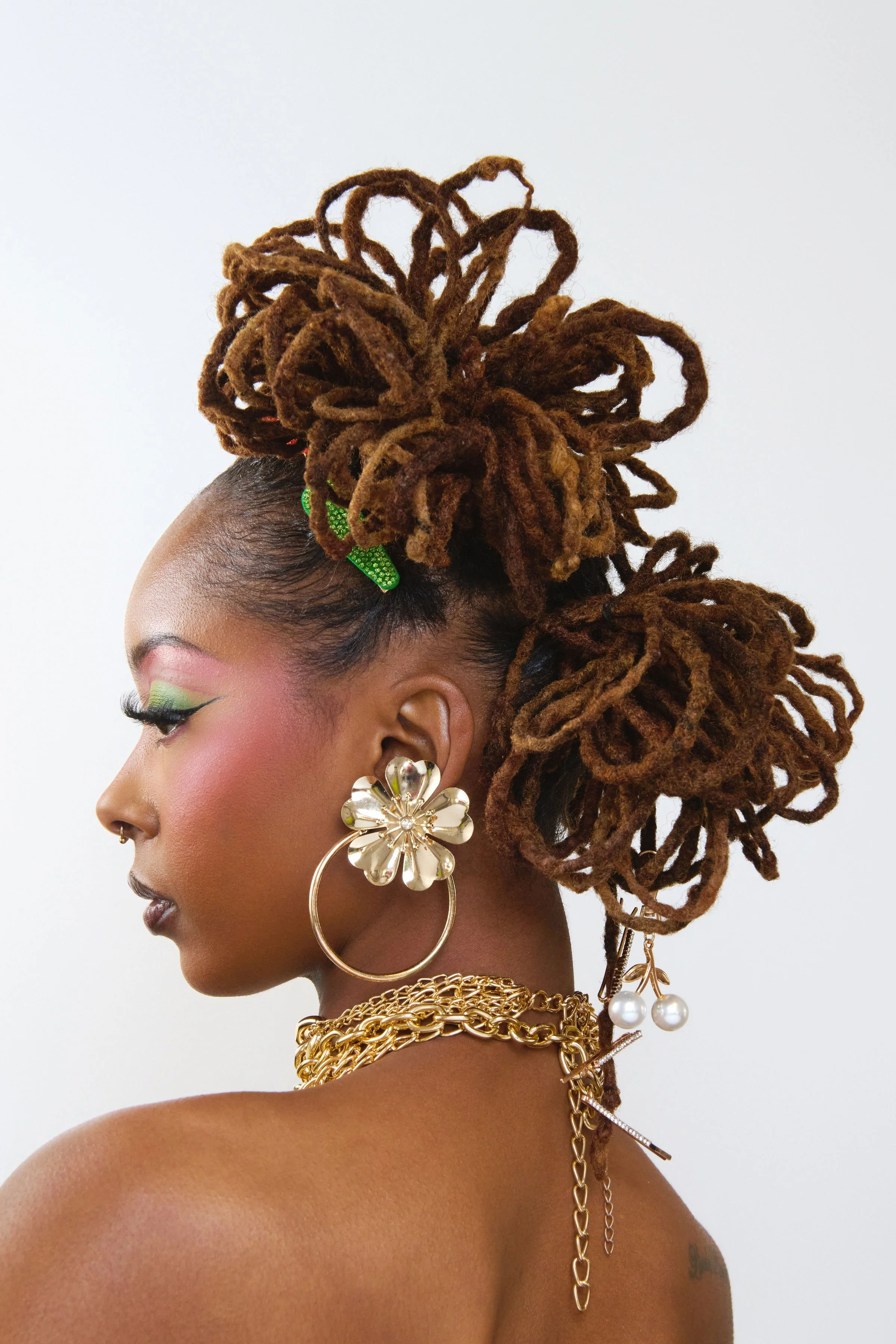
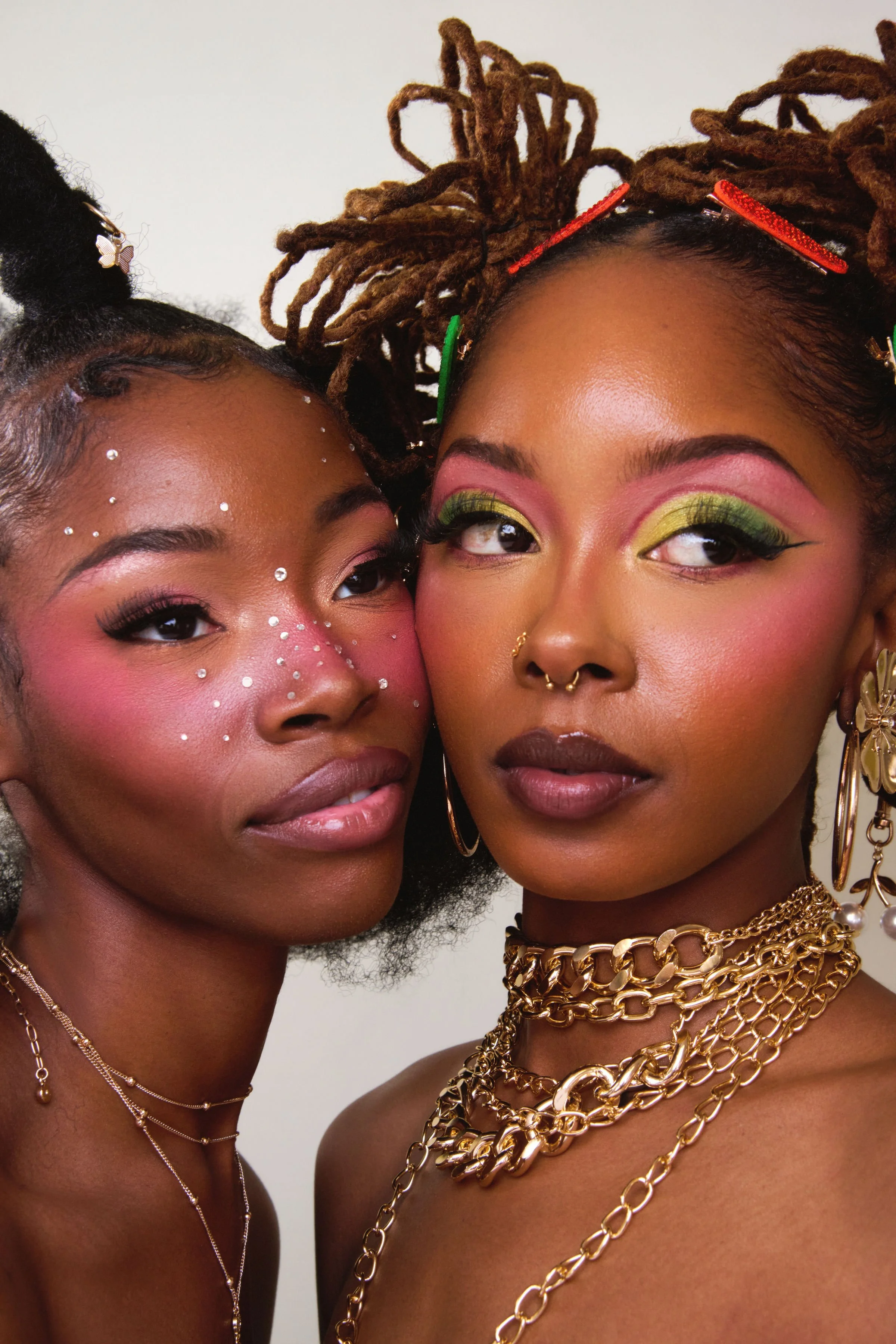
Sculptural locs piled high with rhinestone clips. Oversized gold bamboo earrings engraved with the initials M and S. Lollipops in shades of pink. Gem-dusted faces. Exaggerated hair architecture. Gold chain necklaces worn like armor that happens to be beautiful. The images look heightened, slightly surreal, almost dream-state editorial. Which is exactly right. This was always meant to be another world.
"We are exploring the way that women creatively express themselves — how minority women come out and express ourselves in all different ways. Being bold, being soft, being different."
Leilani K., Creative DirectorThe campaign moves through three visual chapters, each representing a distinct mood in the larger story of self-invention.
Armor as Adornment
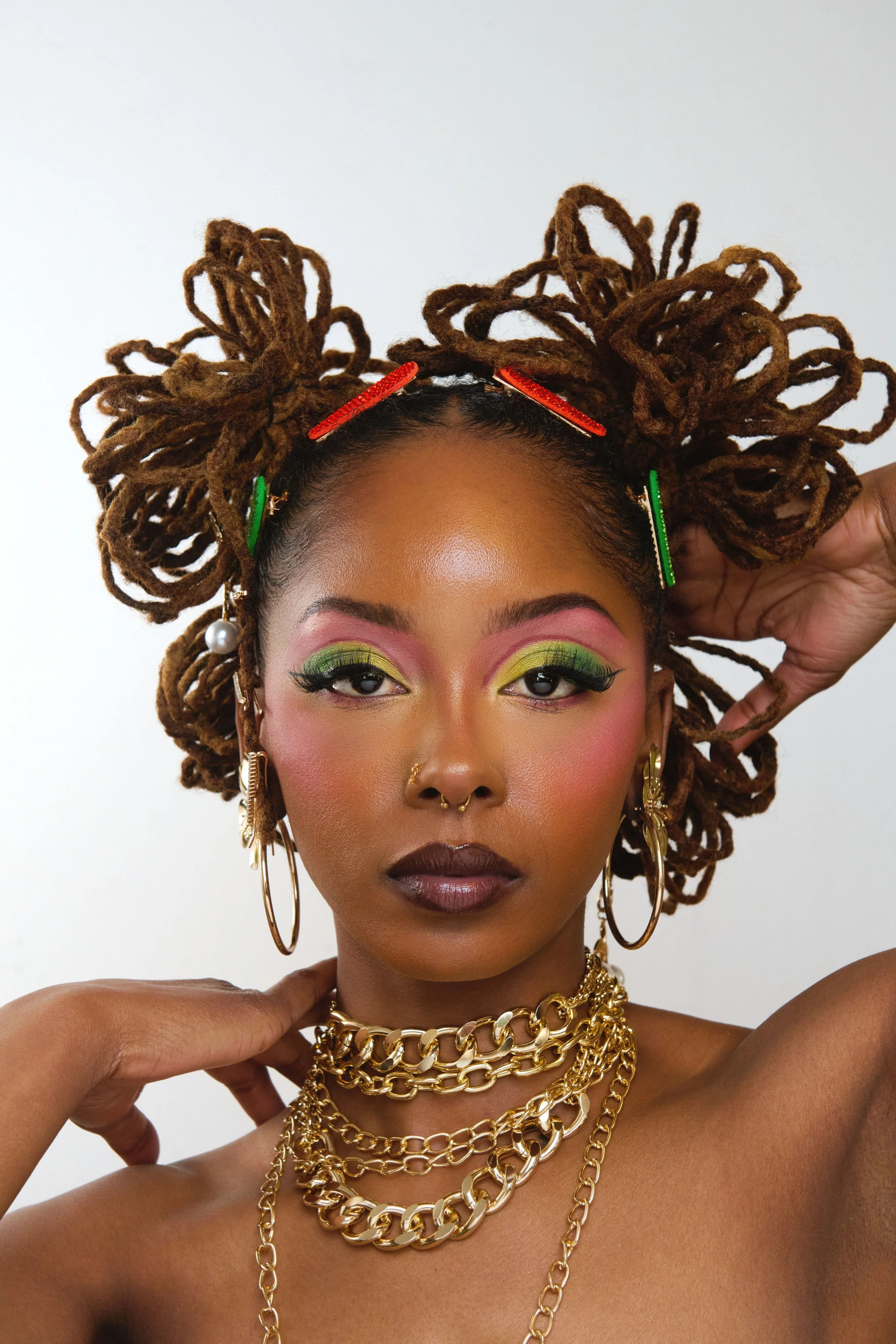
Metallic textures, rhinestone embellishments, structured gold. Protection and power worn as decoration. For many of these women, beauty has always functioned as both shield and statement. The strength is not hidden. It is on display.
Soft and Sovereign
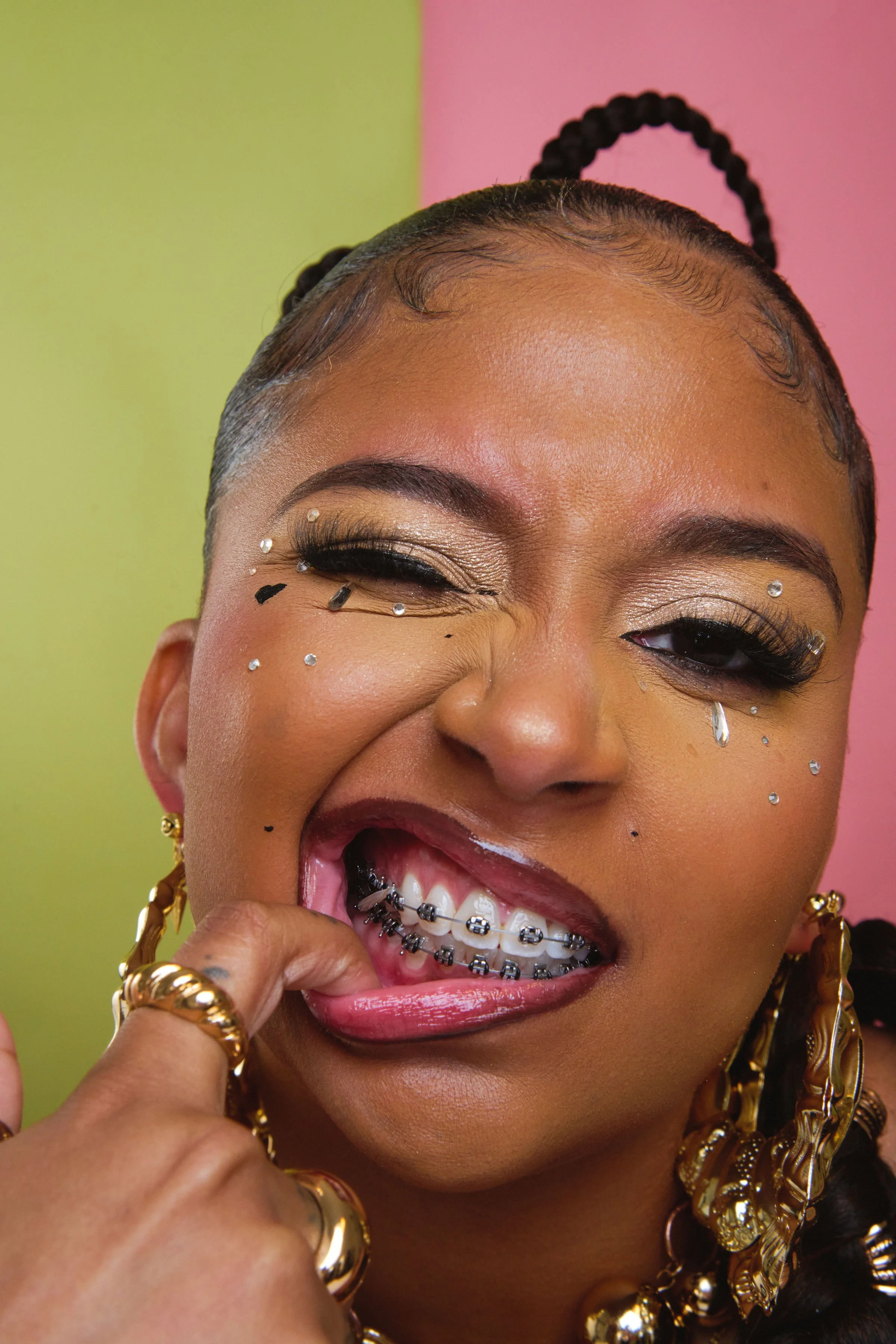
Pink tones, gloss, color, radiance, gems scattered across cheekbones and foreheads. Femininity expressed at full volume. Not reclaimed from anyone — simply turned all the way up. Softness was never the weakness. The dismissal of softness was.
Liberation, Graphic and Complete
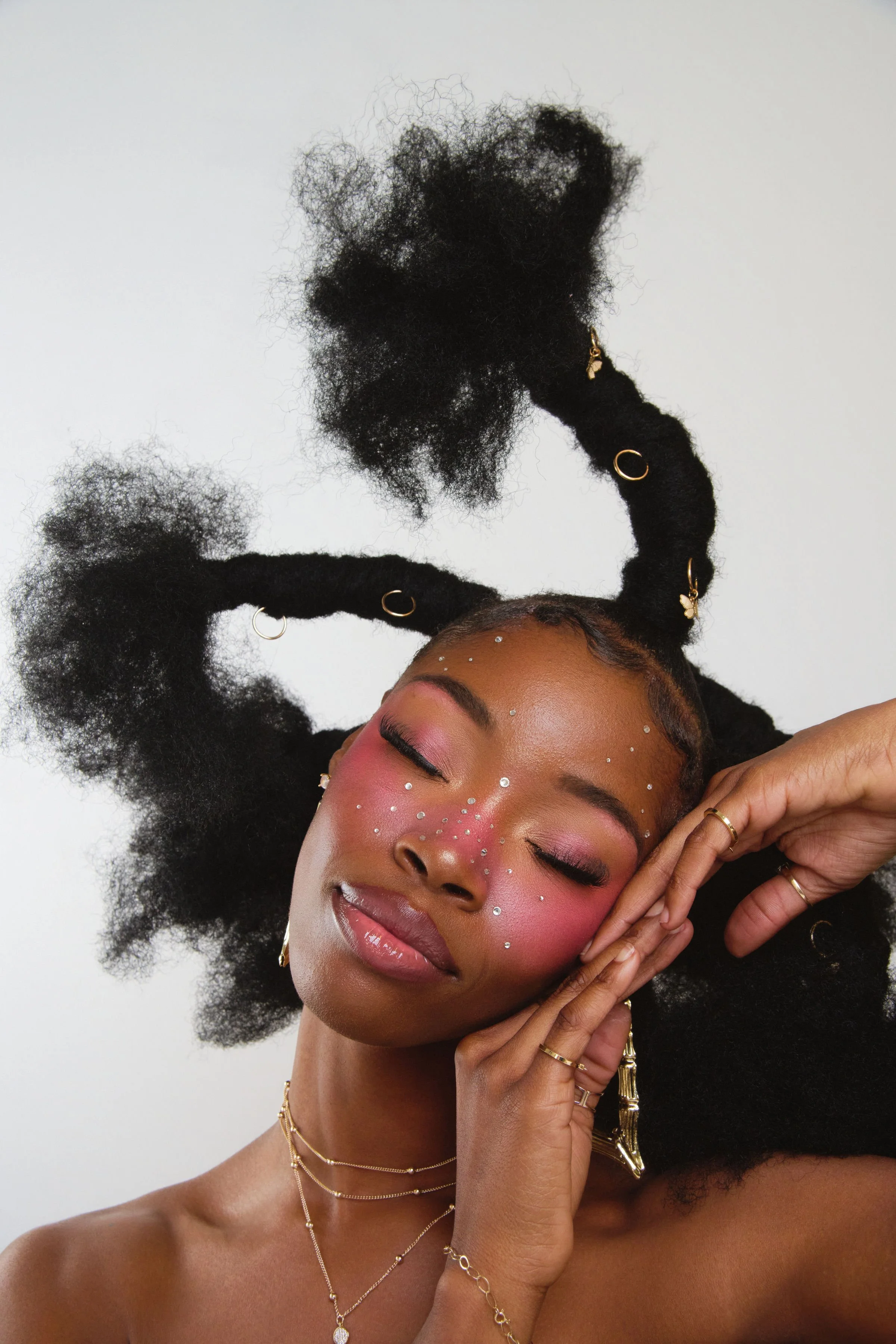
Bold liner, abstract shapes, candy palette, sculptural hair that reads like architecture. This is where the permission becomes total. Identity created freely, without explanation, without apology, and without the expectation that it will be understood immediately.
What these images are actually saying
There is a version of this story that frames Black women's beauty as a site of ongoing struggle. That framing is not wrong, but it is incomplete. It centers the outside gaze even while critiquing it. It makes reclamation the point rather than the starting condition.
We Don't Need Permission to Play refuses that framing from the beginning. The women here are not recovering from anything. They are not performing resilience for an audience. They are not asking to be seen as beautiful by any external standard.
They are simply creating themselves. Loudly, excessively, joyfully. And finding that entirely unremarkable.
The lollipops are not a statement about innocence lost. The rhinestone clips and oversized jewelry and sculptural hair are not commentary. They are choices. Personal, deliberate, excessive choices made by women who understand that adornment is its own complete language, and who have no interest in translating it for anyone.
"It's not just the story behind it — it's what the models can give and bring to life. Seeing them really show what it means to be that unapologetic woman."
Leilani K., Creative DirectorThe women who made it real
Models Jasmine Watson, Jessica Baiza, and Shamia Lassiter are the living center of this campaign. Each brought something distinct to the frame — a specific quality of expression, a specific relationship to their own image — that no brief could have scripted. Hair stylists Da'jour Artis and Mary Pugh built the sculptural worlds that define each look. Makeup artist Saquoya created the gem constellations, the candy tones, and the graphic lines that make these faces feel like they belong to another dimension. Styling by Aliyah Coley and Aaliyah Antandre-Impala completed each look — the jewelry, the layering, the deliberate excess that made every frame feel like a world.
Why this matters for Mostly Sugar
Mostly Sugar is a women-owned digital media brand built by and for women who do not fit neatly into one category. For a brand like that to grow — to attract the right partners, to hold space in national conversations, to build an audience that genuinely connects — it has to be able to show people what it stands for in a way that goes beyond a mission statement.
This campaign does that. It moves Mostly Sugar from describing its values to demonstrating them. It gives sponsors, collaborators, and audiences a living visual example of what playful rebellion, beauty experimentation, and culture-forward femininity actually look like when a brand commits to them completely.
Before this campaign, Mostly Sugar could tell you it was culturally sharp, fashion-forward, and unapologetically centered on Black women and women of color. Now it can show you. Those are not the same thing.
The Mostly Sugar Metaverse also establishes something larger: a framework that makes every future campaign, editorial, and creative collaboration feel cohesive. Each new chapter is a portal. Each portal reveals a new dimension of the Mostly Sugar woman. By the time four chapters exist, this brand will have a complete visual universe it owns entirely — and that is far more powerful than a content archive.
We are not asking for a seat at the table. We are building our own table and decorating it exactly how we want.
We Don't Need Permission to Play.
A creative universe where women get to be all of themselves. Four chapters. Built for every version of women who refuse to be one thing.
