
The Art of Wearing Nature
At the Virginia Museum of History and Culture, Richmond's Mapulder presented a collection rooted in ancient craft, natural color, and the quiet conviction that clothing should make you feel something.
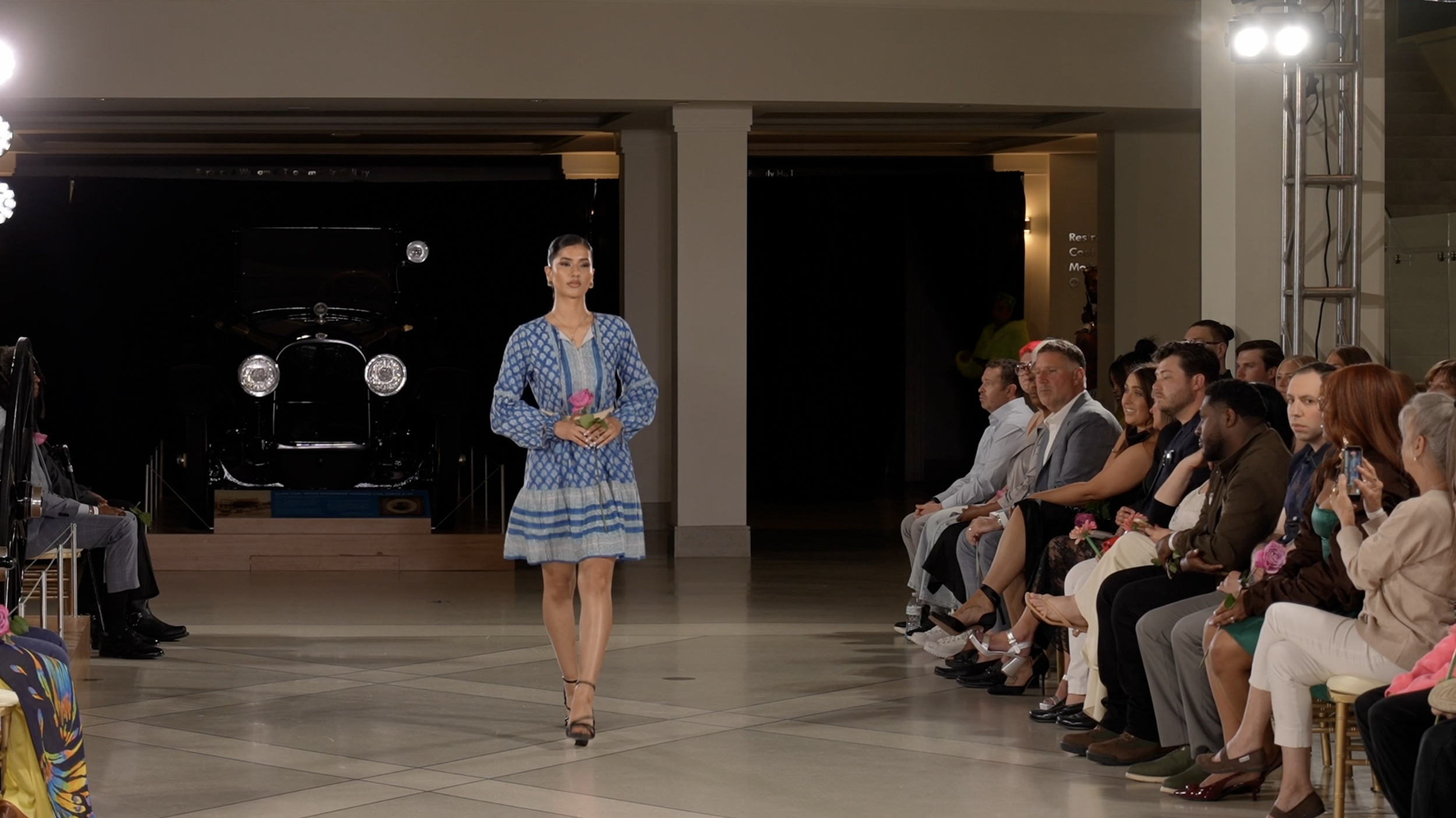
There is a particular kind of attention that settles over a room when something genuine walks through it. At the Virginia Museum of History and Culture, with vintage automobiles anchoring the far end of the runway and a full house of Richmond's fashion community pressing in on both sides, that quality was present from the first look. Mapulderhad arrived.
Founded three years ago in Richmond by Smita, Alanna, and Amar Damodar, the brand operates from a premise that is both simple and radical: that clothing made by hand, from natural materials, dyed with natural pigments, and printed using centuries-old techniques, is not a niche proposition. It is, they argue, simply better. And on this particular evening, it was difficult to disagree.
in Richmond
industry experience
ethically sourced dyes
The name, pronounced may-pulder, is Old Saxon for the maple tree. It is an apt choice. The maple does not perform its color; it becomes it, surrendering to the season completely, flooding its leaves with the kind of saturated, unapologetic brilliance that stops people on sidewalks. Mapulder's ambition is not unlike this. "We bring colors to life," Smita says. She means it literally.
“Ancient techniques that we turned into very modern looks. We believe in feel-good, look-good clothing.”
THE MAKING
To understand Mapulder, one must understand the process. Block printing is not embellishment. It is construction. Each color in a print requires its own hand-carved wooden block. Each block is pressed individually onto the fabric, by hand, in sequence, building the final image layer by layer. The dyes are natural, ethically sourced, and worked in collaboration with artisans the founders know by name. The result is clothing that carries within it the evidence of human attention at every stage.
"When they are printed by hand," Smita explains, "we carved the wood. Each and every color is carved separately and then stamped onto the fabric." She pauses. "So we use natural dyes. All the fabrics are 100 percent cotton."
Block printing and ikat weaving are techniques that predate industrialization by centuries. Mapulder is not deploying them as aesthetic nostalgia. The founders are extending a living tradition into shapes and silhouettes that belong to the present: something you wear to a meeting, to a dinner, to the beach. Something, as Alanna notes, with pockets substantial enough for your phone.
THE SHOW
RVA Fashion Week’s Prototype: Made to Inspireshow opened withthe brand's mommy and me line, a signature Mapulder offering and, for Alanna, a deeply personal one. Her daughter has modeled for the brand since childhood. She is now among the oldest of Mapulder's young models, and will soon age into the women's line. On the runway, mothers and daughters appeared in coordinating prints, flower crowns in their hair, the crowd visibly moved. It was the kind of moment a show does not manufacture. It either happens or it does not.
What followed was a collection of considerable range. Women's dresses in hand-printed cotton, tops, and a linen line making its debut alongside two signature statement pieces: the peacock dress, layered and vivid, and the cherry blossom dress, spare and seasonal, a quiet acknowledgment of the brand's proximity to Washington, DC and its annual bloom. Both were hand-stitched by the founders. Neither will be reproduced exactly.
"Every single piece is imperfectly perfect," Alanna says. "They will not ever be the same."
“We want people to get connected with nature. All our prints, all our styles are talking and calling out nature.”
THE MEN'S OFFERING
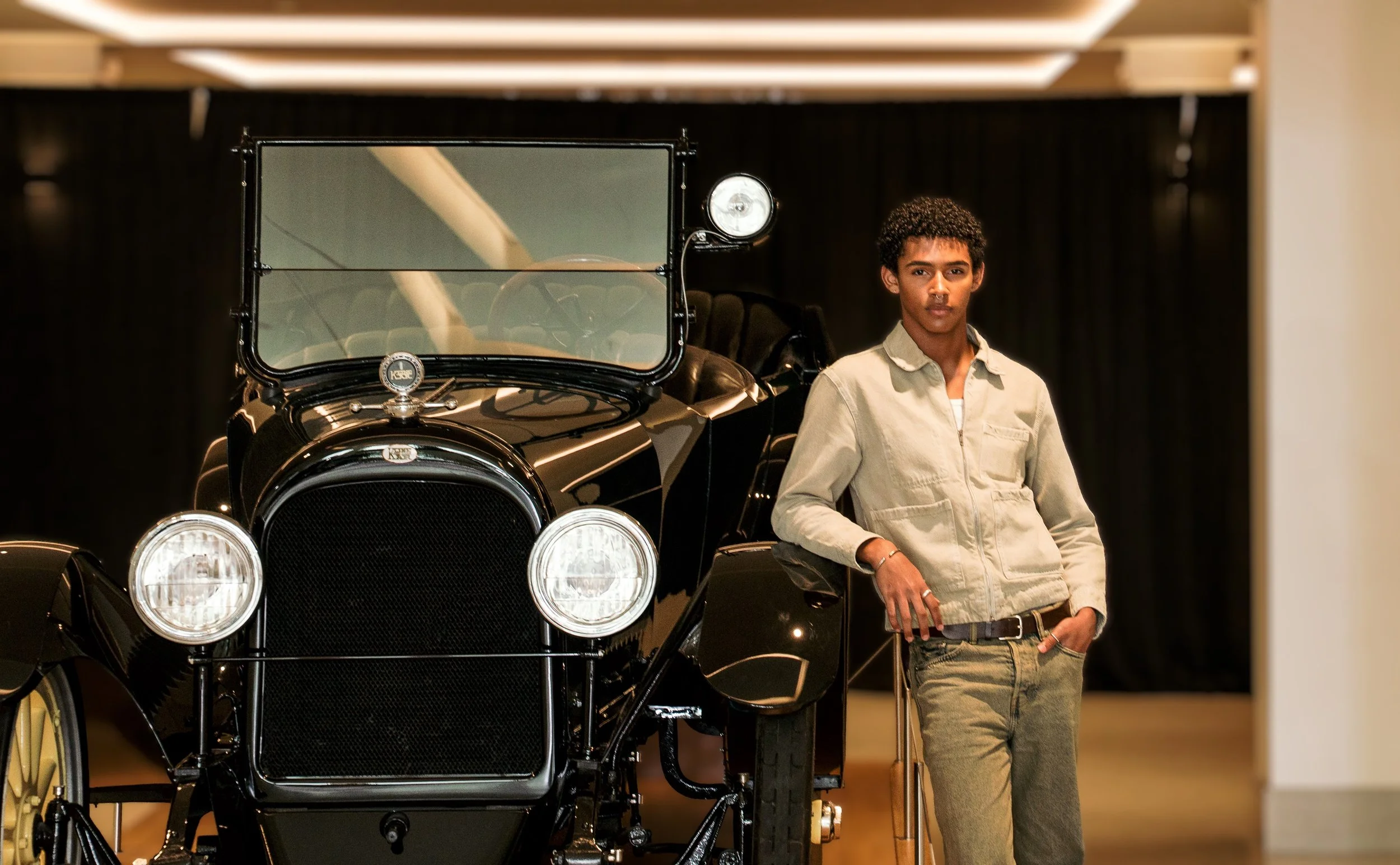
Amar Damodar did not originally intend to model the men's line. "I was persuaded by the overwhelming majority," he says, with the measured tone of a man who has long since made peace with the outcome. He put on the shirt. The cotton was natural, the print hand-stamped, the fit easy without being careless. "It felt much better," he says simply. The signature cap followed. He wears both regularly.
On the runway, the men's pieces moved with the same unhurried quality as the rest of the collection. Natural prints, relaxed silhouettes, nothing overworked. The male customers, Amar reports, respond the same way he did. They try it. They come back. "They identify with it."
THE RETURN
What Mapulder has built, quietly and over time, is something the fashion industry nominally prizes and rarely achieves: genuine repeat customers. People who bought a dress three months ago and return, not because a campaign told them to, but because the dress became something they reached for again and again until it felt irreplaceable.
"They'd say, 'We bought this three months back and we love it so much we'd like to take one more,'" Smita says. "For ourselves, for our family, for our friends. It's really nice to connect with them. That's the beauty of it."
THE FOUNDERS
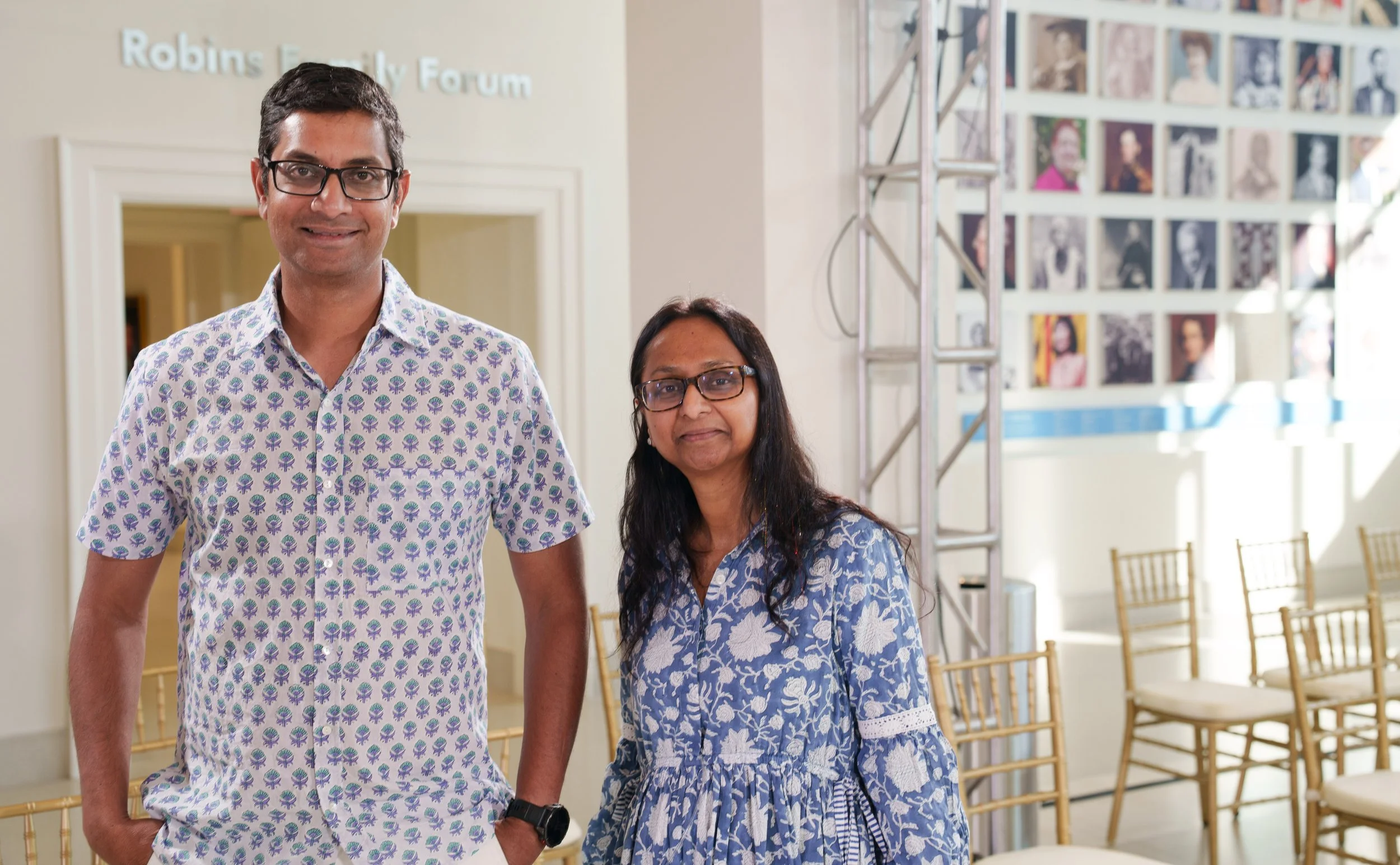
Standing together before the show, the three Damodars looked precisely like what they are: a family that built something real, in a city they chose, without compromising on what they believed the work should be. Alanna, who carries the emotional center of the brand's storytelling, offered the evening's most memorable line to any mother-founder in the audience who might be watching.
“Don’t give up. Dig deep. You got this. You’re stronger than you know. And there’s somebody watching who’s very important — the little one that’s trying to mimic you and follow in your footsteps the best way they know how.”
Three years in, Mapulder remains exactly what it set out to be: a family company, nature-inspired, handmade, built for people who want to feel something when they get dressed. It is not a large operation. It does not need to be. The work speaks with the quiet authority of things made well, and the customers, increasingly, are listening.